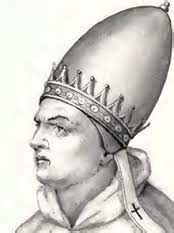
The Lives and Enduring Legacies of Popes Named Leo\n\nHey there, history buffs and curious minds! Ever found yourself wondering about the Popes named Leo? Maybe you even searched for something like “Pope Leo age today”? If so, you’re not alone! It’s a common query, and it brings up a really interesting point: while there isn’t a Pope Leo presiding over the Catholic Church
today
, the historical figures bearing this name have left an
indelible mark
on Christianity, Europe, and even the world. From powerful defenders of faith and cities to influential reformers and social justice pioneers, the Popes Leo have shaped centuries of history. So, grab a coffee, because we’re about to dive deep into their fascinating stories, exploring their lives, their pivotal decisions, and why their legacies continue to
resonate powerfully
in our modern era. We’ll uncover how their influence, far from being confined to dusty history books, still impacts the way we understand religion, politics, and social ethics today. It’s truly incredible how their actions, sometimes from over a thousand years ago, continue to provide context and inspiration for current challenges and discussions within both the religious and secular spheres. We’re going to explore not just who they were, but
what
they did, and
why
it matters right now.\n\n## Unraveling the Mystery: Is There a Pope Leo Today?\n\nLet’s get straight to the point, guys: if you’re searching for “Pope Leo age today,” the quick answer is no,
there isn’t a Pope Leo currently leading the Catholic Church
. The current Pontiff, as many of you know, is Pope Francis. The name “Leo” has been held by thirteen Popes throughout history, with the last one being Pope Leo XIII, who passed away in 1903. This might seem like a simple clarification, but it’s important because the question itself highlights a natural curiosity about historical figures and their lasting impact. Why do so many people still search for “Pope Leo”? Well, it’s often due to the sheer
historical significance
and
profound influence
that several Popes named Leo had during their respective pontificates. Their decisions and leadership moments were so impactful that their names echo through time, making people wonder if such a monumental figure could still be among us today. It speaks volumes about the enduring power of their legacies. For instance, Pope Leo I, often called
“Leo the Great,”
was instrumental in asserting papal authority and famously confronted Attila the Hun, effectively saving Rome from destruction. Then there’s Pope Leo III, who crowned Charlemagne, laying the groundwork for the Holy Roman Empire. And, perhaps most significantly in modern memory, Pope Leo XIII, whose encyclical
Rerum Novarum
laid the foundation for modern Catholic social teaching, addressing issues of labor rights and social justice during the Industrial Revolution. Each of these figures, and others named Leo, navigated complex political, theological, and social landscapes, leaving behind a rich tapestry of contributions that continue to be studied and debated. So, while there isn’t a
living
Pope Leo, their collective “age today” can be understood as the
ongoing relevance
of their teachings and the foundational role they played in shaping the Catholic Church and Western civilization. Understanding this distinction is key to appreciating the depth of their historical footprint and how their contributions continue to shape contemporary thought, even if their physical presence is long gone. Their stories aren’t just historical footnotes; they’re
vibrant narratives
that provide essential context for understanding the evolution of the Church and its engagement with the world. We’ll dive into some of the most influential ones next, exploring why their names remain so prominent in historical discourse and why their actions truly
matter
to us, even centuries later.\n\n## Pope Leo I: The Great Defender of Rome and Papal Authority\n\nOur journey begins with one of the true giants of the papacy,
Pope Leo I
, famously known as
Leo the Great
. His pontificate, from 440 to 461 AD, was nothing short of extraordinary, unfolding during a period of immense turmoil and transformation for the Roman Empire.
Imagine this, guys
: the Western Roman Empire was crumbling, barbarian tribes were at its gates, and the very fabric of society seemed to be unraveling. It was into this chaos that Leo stepped, not just as a spiritual leader, but as a crucial figure in asserting the
primacy of the Roman See
– the idea that the Pope held ultimate authority in the Christian world. His most famous moment, etched forever in history, was his legendary encounter with
Attila the Hun
in 452 AD. With the Huns marching towards Rome, Leo, along with two other prominent Romans, rode out to meet the fearsome “Scourge of God.” What exactly transpired in that meeting remains shrouded in some mystery, but the outcome was undeniable: Attila turned his army away from Rome, sparing the city from certain destruction. Whether it was Leo’s persuasive diplomacy, divine intervention, or practical considerations on Attila’s part, this act solidified Leo’s image as the
savior of Rome
and greatly enhanced the moral authority of the papacy. Beyond this dramatic event, Pope Leo I was a relentless theologian and administrator. He played a pivotal role in the
Council of Chalcedon
in 451 AD, a council that defined the two natures of Christ (divine and human) as distinct yet united in one person, a doctrine that remains a cornerstone of Christian theology. Leo’s famous
Tome
, a letter to the Patriarch Flavian of Constantinople, was read at the council and received with acclamation, with bishops reportedly crying out,
“Peter has spoken through Leo!”
This moment was crucial in establishing the Pope’s doctrinal authority. His writings, which include nearly 100 sermons and 150 letters, are a treasure trove of early Christian thought, emphasizing the unity of the Church and the importance of orthodox belief. He vigorously combated heresies like Manichaeism and Pelagianism, ensuring the doctrinal purity of the Church during a time of intellectual ferment. The
enduring legacy
of Pope Leo I is multi-faceted. He not only saved Rome from conquest but also profoundly shaped the understanding of the papacy itself, firmly establishing the Bishop of Rome as the spiritual successor of St. Peter and the
universal head of the Church
. His theological precision, administrative skill, and fearless leadership in the face of immense challenges set a precedent for future Popes and continue to inspire leaders today. His
“age today”
is seen in the foundational principles of papal authority and orthodox Christology that he so powerfully articulated and defended, proving that some influences truly transcend time.\n\n## Pope Leo III: Crowning an Emperor and Forging Europe\n\nMoving forward a few centuries, we encounter
Pope Leo III
, whose pontificate from 795 to 816 AD was nothing short of revolutionary, fundamentally altering the course of European history.
Seriously, guys
, this Pope wasn’t just a spiritual leader; he was a political powerhouse whose actions created ripples that lasted for a millennium! His reign was marked by turbulent politics both within Rome and across Europe. Leo III faced significant opposition from the Roman nobility, who even physically attacked him in 799 AD, attempting to blind and mutilate him, accusing him of various crimes. He barely escaped and fled to seek refuge with
Charlemagne
, the powerful King of the Franks. This event, a testament to the dangerous political climate of the era, set the stage for one of the most iconic moments in history: Charlemagne’s journey to Rome. On Christmas Day, December 25, 800 AD, during Mass in St. Peter’s Basilica, Pope Leo III performed an act that would define the next thousand years of European history. As Charlemagne knelt in prayer, Leo placed an imperial crown upon his head, proclaiming him
Emperor of the Romans
. This wasn’t just a symbolic gesture; it was a profound declaration that effectively revived the Western Roman Empire, now known as the
Holy Roman Empire
. This act, while deeply significant, was also complex and controversial. It immediately raised questions about the relationship between papal and imperial power – who held ultimate authority? Did the Pope have the right to create an emperor? Did the emperor derive his power from God via the Pope, or directly? This foundational tension would shape European politics and the Church’s role for centuries to come. The
crowning of Charlemagne
also had profound implications for the East-West divide within Christianity. The Byzantine Empire, centered in Constantinople, considered itself the sole legitimate successor to the Roman Empire, and they were, let’s just say,
not thrilled
about a Germanic king being crowned “Emperor of the Romans” by the Bishop of Rome. This deepened the growing rift between the Eastern and Western Churches. Furthermore, Pope Leo III was involved in the early stages of the “Filioque” controversy, a theological dispute over the wording of the Nicene Creed concerning the procession of the Holy Spirit. While he upheld the doctrine, he initially resisted adding the “Filioque” clause (meaning “and the Son”) to the Creed itself, fearing it would further alienate the East. The
enduring legacy
of Pope Leo III is immense. He not only created the Holy Roman Empire, a political entity that dominated Central Europe until 1806, but also cemented the idea of the Pope as a supreme spiritual and
temporal
authority, capable of bestowing imperial power. His actions fundamentally shaped the political landscape of Europe, fostering a close, albeit often contentious, relationship between the papacy and secular rulers. His
“age today”
is visible in the historical trajectory of European political thought, the development of nation-states, and the long-standing dialogue between religious and secular power. He truly laid the groundwork for the medieval world and beyond, making his reign a crucial chapter in the human story.\n\n## Pope Leo IX: A Reformer in Troubled Times and the Seeds of Schism\n\nFast forward to the 11th century, and we encounter
Pope Leo IX
, whose pontificate from 1049 to 1054 AD marked a critical turning point in the history of the Catholic Church.
This guy was a force for change, no doubt about it!
Born Bruno of Egisheim-Dagsburg, Leo IX came to the papacy during a period often referred to as the
“Saeculum Obscurum,”
or the “Dark Age” of the papacy, when the office was frequently controlled by powerful Roman families and secular rulers, leading to widespread corruption and a decline in moral authority. Leo IX was a passionate reformer, determined to cleanse the Church of its most pressing ills. His primary targets were
simony
(the buying and selling of Church offices) and
clerical marriage
(which was widely practiced despite increasing calls for celibacy). He believed these practices undermined the spiritual integrity and independence of the clergy. To combat these issues, Leo IX embarked on frequent journeys across Europe, holding synods (church councils) in various cities like Reims and Mainz. Unlike many of his predecessors who remained confined to Rome, Leo traveled extensively, preaching reform, deposing corrupt bishops, and enacting decrees aimed at restoring discipline and moral rectitude within the Church. These efforts were groundbreaking, as they asserted papal authority over local ecclesiastical matters in an unprecedented way. He surrounded himself with a group of like-minded reformers, including figures like Humbert of Silva Candida and Peter Damian, who would become instrumental in the Gregorian Reforms that followed his pontificate. However, Leo IX’s reign is also tragically remembered for setting the stage for the
Great Schism of 1054
, the formal and permanent split between the Roman Catholic Church and the Eastern Orthodox Church. The existing tensions between East and West – cultural, political, and theological – reached a breaking point during his papacy. Key disputes included the
Filioque
clause in the Creed, the use of unleavened bread in the Eucharist in the West versus leavened bread in the East, and the assertion of papal primacy by Rome. In 1054, Leo IX sent a delegation, led by the fiercely uncompromising Cardinal Humbert, to Constantinople to negotiate with Patriarch Michael Cerularius. The negotiations failed spectacularly. On July 16, 1054, Humbert dramatically placed a
bull of excommunication
against the Patriarch on the altar of the Hagia Sophia, essentially condemning the entire Eastern Church. Cerularius responded by excommunicating the papal legates. While Leo IX had actually died three months earlier, the excommunications were posthumously attributed to him and widely accepted, leading to the irreparable split that continues to this day. The
enduring legacy
of Pope Leo IX is complex. On one hand, he was a pivotal figure in initiating the
Gregorian Reform movement
, which would profoundly reshape the Church, leading to a more centralized and morally upright papacy. His vigorous campaign against simony and clerical marriage laid the groundwork for a more independent and spiritual clergy. On the other hand, his pontificate inadvertently culminated in the Great Schism, a wound that has never fully healed between Eastern and Western Christianity. His
“age today”
is reflected in the ongoing quest for Church reform, the deep historical roots of the East-West divide, and the continuing dialogue between different Christian traditions. He stands as a powerful reminder of how even the best intentions can have unforeseen and far-reaching consequences in the grand tapestry of history.\n\n## Pope Leo XIII: Modernity, Social Justice, and
Rerum Novarum
\n\nNow, let’s turn our attention to the Pope Leo who is perhaps most relevant to modern thinking,
Pope Leo XIII
, whose remarkably long pontificate spanned from 1878 to 1903.
This guy truly bridged centuries
, leading the Church from the late 19th into the early 20th century, a period of dramatic social, political, and industrial upheaval. When Leo XIII took office, the world was grappling with the profound changes brought about by the Industrial Revolution: rapid urbanization, the rise of powerful capitalist systems, widespread poverty among the working class, and the growing influence of socialist and communist ideologies. The Catholic Church itself was facing new challenges, including the loss of the Papal States and a sometimes strained relationship with emerging nation-states. Pope Leo XIII was a deeply intellectual and forward-thinking leader. He understood that the Church could not remain aloof from these pressing issues. Instead, he believed it had a moral imperative to engage with the modern world and offer solutions rooted in Christian principles. His most
monumental achievement
was the issuance of the encyclical
Rerum Novarum
(Latin for “Of New Things”) in 1891. This document was a groundbreaking text that addressed the “condition of labor,” advocating for the rights of workers, the right to form unions, and calling for a living wage. It condemned the exploitation of labor and also critiqued the excesses of unbridled capitalism while rejecting the atheistic tenets of socialism.
Rerum Novarum
laid the
foundations of modern Catholic social teaching
, outlining principles such as the dignity of the human person, the common good, subsidiarity, and solidarity. It stressed the importance of private property but also emphasized its social function and the moral obligation of employers to treat workers fairly. This encyclical was revolutionary because it offered a third way, distinct from both laissez-faire capitalism and Marxist socialism, providing a robust framework for social justice within a Christian context. Its influence cannot be overstated; it sparked a wave of Catholic social activism, inspired the formation of Christian democratic parties, and continues to be cited as a foundational document in discussions about economics, ethics, and human rights. Beyond
Rerum Novarum
, Leo XIII was a prolific writer, issuing many other encyclicals on topics ranging from Christian philosophy (
Aeterni Patris
, promoting Thomism) to the Rosary. He fostered a revival of Catholic intellectual life and encouraged engagement with contemporary thought. He also promoted reconciliation between the Church and modern states, even as he steadfastly defended the rights and independence of the Holy See. His diplomatic skills were highly regarded, and he sought to build bridges with various governments. The
enduring legacy
of Pope Leo XIII is immense. He not only brought the Church into a meaningful dialogue with the challenges of modernity but also articulated a powerful vision for social justice that continues to inspire. His intellectual depth, pastoral care, and willingness to address complex societal issues made him one of the most significant Popes of the modern era. His
“age today”
is vibrantly alive in the ongoing development of Catholic social teaching, which has been expanded upon by subsequent Popes like John XXIII (
Mater et Magistra
), Paul VI (
Populorum Progressio
), John Paul II (
Laborem Exercens
and
Centesimus Annus
), and Francis (
Laudato Si’
and
Fratelli Tutti
). Every time discussions arise about workers’ rights, economic justice, or the ethical responsibilities of business, the spirit and principles of Pope Leo XIII’s
Rerum Novarum
are there, guiding and influencing thought and action. He truly showed how timeless spiritual principles could be applied to very contemporary, complex problems, making his contributions
exceptionally relevant
even over a century after his passing.\n\n## The Lasting Impact: Why Popes Leo Still Matter Today\n\nSo, after journeying through centuries of papal history, we’ve seen that the name
Leo
isn’t just a placeholder for a few Popes; it represents a lineage of leaders who, each in their own way, profoundly shaped the world. From the
fierce defender of Rome
in Leo I, to the
empire-builder
Leo III, the
determined reformer
Leo IX, and the
social justice pioneer
Leo XIII, their contributions continue to cast a long shadow, influencing our understanding of faith, power, and society. Their
lasting impact
isn’t merely a historical curiosity; it’s a vibrant, ongoing conversation that echoes in the halls of academia, the pulpits of churches, and the daily lives of people striving for a better world. Why do these Popes Leo still matter today, even though none are alive? It’s because the issues they tackled, the doctrines they defended, and the reforms they initiated are not confined to their historical periods.
Guys, think about it
: Leo I’s assertion of papal primacy remains a cornerstone of Catholic ecclesiology, influencing how the Church organizes itself and exercises authority globally. His defense of Rome against barbarian hordes speaks to the timeless struggle for civilization against chaos, a narrative that resonates deeply in times of uncertainty. Leo III’s audacious crowning of Charlemagne established a powerful, albeit complex, relationship between spiritual and temporal power, a dynamic that societies continue to grapple with when considering the role of religion in politics. The tensions between church and state, the very notion of a moral authority influencing political decisions, can trace roots back to this pivotal moment. Leo IX, despite the unintended schism, ignited a crucial reform movement that transformed the internal structures and moral fabric of the Church, setting standards for clerical conduct and spiritual integrity that are still foundational. His efforts remind us that institutions, even ancient ones, require constant self-reflection and renewal to remain relevant and true to their mission. And then, there’s Leo XIII, whose encyclical
Rerum Novarum
is arguably the most
enduring and influential
contribution of any Pope Leo in the modern era. Its principles on labor rights, the just wage, the common good, and the dignity of work are not relics of the past; they are
living principles
that inform current debates on economic inequality, corporate responsibility, and the ethical implications of global capitalism. Every time a new social encyclical is released, or a religious leader speaks out on economic justice, you can feel the spirit of Leo XIII’s pioneering work. It’s a testament to his foresight that his ideas, born in the age of steam and factory floors, remain profoundly relevant in our digital age of automation and global supply chains. The collective
“age today”
of these Popes Leo is truly about their
timeless relevance
. They represent different facets of the Church’s historical engagement with the world: as a guardian of faith, a shaper of political order, a moral reformer, and a champion of social justice. Their stories remind us that leadership, especially spiritual leadership, involves navigating complex ethical dilemmas, standing firm on principles, and adapting to ever-changing circumstances. Their legacies challenge us to look beyond the immediate and consider the long-term impact of our decisions, inspiring us to draw lessons from history as we face the challenges of our own time. In essence, the Popes named Leo, though long departed, continue to speak to us through the
monumental impact
of their lives and the enduring power of their ideas, making their collective presence as significant today as it was in their own lifetimes.\n\n## Conclusion\n\nAnd there you have it, folks! Our deep dive into the lives and legacies of the Popes named Leo clearly shows that while there isn’t a
Pope Leo
alive today, their historical footprint is vast and incredibly significant. From the audacious diplomacy of Leo I saving Rome, to the empire-shaping actions of Leo III, the vital reforms of Leo IX, and the social justice wisdom of Leo XIII, these figures have left an
unmistakable mark
on the Catholic Church and Western civilization. Their “age today” isn’t measured in years, but in the enduring relevance of their teachings, the foundational principles they established, and the ongoing inspiration they provide. Understanding these powerful leaders helps us grasp not just church history, but the broader narrative of human progress, conflict, and the continuous quest for a just and meaningful society. So, the next time you hear the name Leo, you’ll know it represents far more than just a historical title; it embodies centuries of
profound influence
that continues to shape our world. Keep exploring, keep questioning, and keep learning from the past to build a better future!\n
